

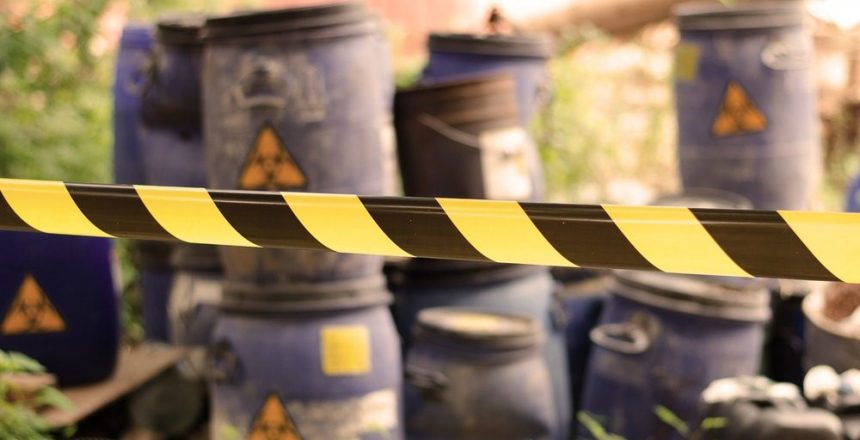
On Monday, President Trump ordered the U.S. Army to suspend a planned controlled detonation of nearly 5 tons of deteriorating bomb-making chemicals in southeastern Iowa, stating the operation will not move forward without sign-off from both a federal appeals court and the state’s incoming Democratic governor. The directive introduces fresh uncertainty to a volatile situation at the Iowa Army Ammunition Plant near Middletown, where officials have repeatedly rescheduled the disposal of 68 barrels of degraded lead azide. While Trump maintained in a social media post that destroying the material quickly is the safest option because there is a “substantial chance that this material will explode on its own volition,” he halted the blast pending outside approval.
In a statement posted to Truth Social, the president explained his reasoning while shifting accountability onto state leadership should an accidental explosion occur. “I feel the proper course is to get rid of this longterm problem but, at the same time, have ordered the Military not to do so until such time as the Eighth Circuit agrees that we can go forward, and am further making this decision fully subject to the incoming Governor Elect, Rob Sand, agreeing to the operation,” Trump wrote. He added that if Sand or the judiciary block the effort, the administration will hold the incoming governor accountable for “any and all death or destruction caused by this very unfortunate, and longterm, situation.” Sand, who previously criticized an “unacceptable lack of communication and clarity” surrounding the blast, noted on Sunday that past decisions left the region with limited options, stating, “No good options exist and the situation is more dangerous and unpredictable than it ever should have been.”
Military officials discovered in March that liquid inside the aging drums—stored at the facility for more than two decades—had evaporated, causing unstable, needle-shaped crystals to form. Army experts have warned that moving or chemically treating the roughly 9,700 pounds of lead azide risks triggering a fatal, spontaneous explosion, particularly as regional temperatures drop below freezing. Originally slated for last Friday, the controlled blast was postponed multiple times—most recently to Wednesday—amid mounting alarm from residents and local officials across southeastern Iowa and neighboring Illinois over a projected airborne plume of toxic lead dust.
The disposal effort has also sparked an intense legal battle over federal environmental oversight. Environmental advocacy groups petitioned the U.S. Court of Appeals for the 8th Circuit last week to block the blast, arguing the Environmental Protection Agency improperly granted an emergency permit without thoroughly evaluating safer disposal alternatives or adequately warning surrounding communities. Although the appeals court issued a temporary stay on Thursday, the Army had initially signaled it would bypass the judicial hold under emergency powers before Trump intervened on Monday to pause the operation.
Editorial credit: DANAI KHAMPIRANON / Shutterstock.com