

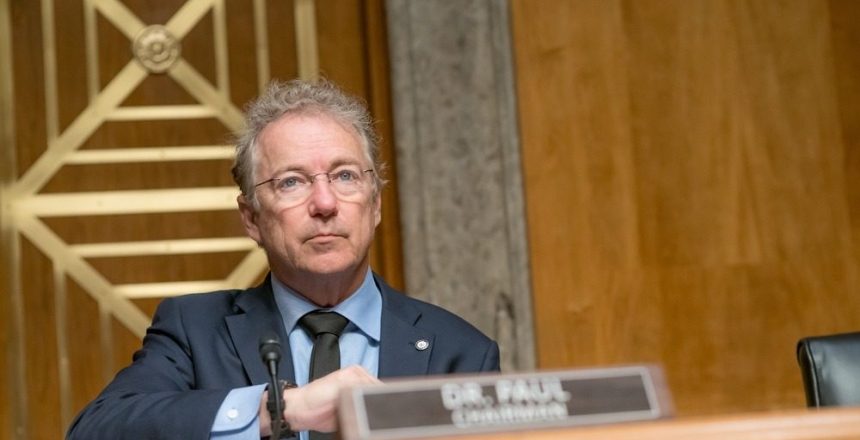
A U.S. Senate panel voted along party lines Thursday to hold former top infectious disease official Dr. Anthony Fauci in contempt of Congress, escalating a long-running political battle over the government’s response to the COVID-19 pandemic. The 8-5 decision by the Senate Homeland Security and Governmental Affairs Committee came after the retired scientist repeatedly invoked his Fifth Amendment right against self-incrimination during a subpoenaed hearing last week, choosing to decline questions more than 100 times. The resolution charges the former director of the National Institute of Allergy and Infectious Diseases with failing to fulfill a congressional subpoena, paving the way for potential federal misdemeanor charges.
Committee Chairman Sen. Rand Paul, R-Ky., argued that constitutional protections against self-incrimination were inapplicable because former President Joe Biden had previously issued Fauci a broad presidential pardon covering his government service. Addressing the panel, Paul insisted that the vote focused strictly on congressional oversight authority rather than pandemic policy, stating that “Dr. Fauci faced no risk of federal prosecution,” and “All he had to do was tell the truth.” Republican lawmakers contended that accepting a pardon required full transparency, asserting that witnesses cannot receive immunity while simultaneously refusing to answer legislative inquiries.
Fauci and committee Democrats rejected that premise, arguing that testimony could expose him to new legal exposure or perjury traps outside the scope of his executive pardon. In his opening remarks at the hearing, the 85-year-old scientist accused the chairman of harboring an “obvious obsession with calling for my prosecution.” Defending his client following the committee’s decision, Fauci’s attorney, David Schertler, described the action as a “crude political stunt intended to punish Dr. Fauci for exercising his constitutional rights.” Democratic lawmakers made several unsuccessful procedural attempts to delay the proceeding, warning that penalizing a witness for claiming constitutional rights would set a dangerous precedent for future legislative oversight.
Following the panel’s vote, Paul indicated plans to bypass a standard vote before the full Senate—where opposition would likely prevent the resolution from reaching the 60-vote threshold needed to clear a filibuster—and hand-deliver the contempt referral directly to federal prosecutors. The move transfers the matter to the U.S. Attorney’s Office in Washington and the Department of Justice, which must determine whether to initiate a formal investigation or seek an indictment. Contempt of Congress is a federal misdemeanor punishable by fines and up to 12 months in prison upon conviction.
The committee’s action represents the latest clash in a multi-year dispute between Paul and Fauci over public health measures, research funding, and the origins of SARS-CoV-2. Prior to the hearing, Republican investigators released thousands of pages of internal government documents, including personal diary entries recorded during the pandemic’s onset. Justice Department officials have confirmed that congressional referrals undergo routine review, though no decision has been announced regarding further legal action against the retired health official.
Editorial credit: Shedrick Pelt / Shutterstock.com