

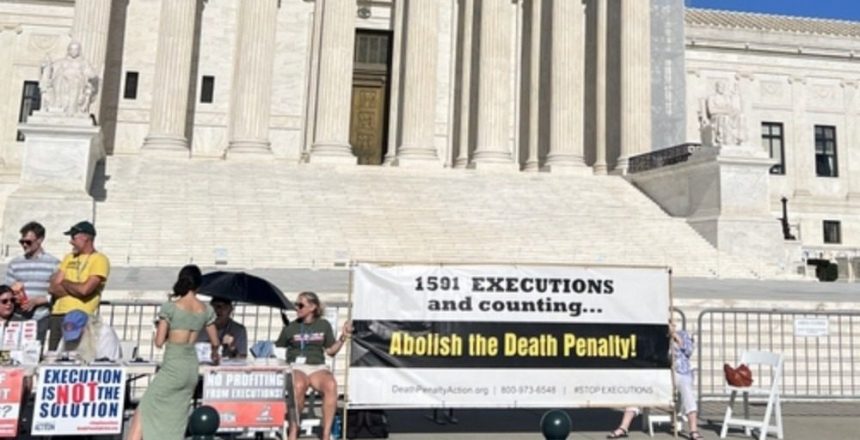
Tennessee death row inmate Christa Gail Pike survived an unsuccessful lethal injection Wednesday after a federal appeals court briefly halted her execution, only for the U.S. Supreme Court to overturn the stay and allow the state to proceed. Pike, 50, was ultimately administered two doses of pentobarbital at Riverbend Maximum Security Institution, but remained alive and was later taken by ambulance to a hospital for treatment.
Pike’s execution had been scheduled for 10 a.m. CDT, but the 6th U.S. Circuit Court of Appeals issued a stay shortly beforehand while it considered whether newly presented claims about Pike’s history of childhood sexual abuse and rape had been properly addressed in earlier proceedings. The appeals court said a short delay was necessary to review the issues. The Supreme Court later vacated the stay, clearing the way for Tennessee to carry out the execution. Justices Sonia Sotomayor, Elena Kagan and Ketanji Brown Jackson dissented, with Sotomayor arguing that the lower court should have been allowed to complete its review.
The execution attempt began hours later. Media witnesses reported that Pike remained breathing and was audibly snoring well after both injections were administered. Witnesses also reported hearing gasps and Pike complain of discomfort in her arm before the execution was halted and medical personnel were called. The Tennessee Department of Correction said it followed the state’s established execution protocol and that Pike was transported to an off-site medical facility.
Pike was sentenced to death for the 1995 killing of 19-year-old Colleen Slemmer, a classmate at a Knoxville Job Corps program. Pike was 18 at the time of the crime. The case has drawn prolonged public attention, both for the gruesome nature of the offense and the broader ethical debate surrounding capital punishment for capital crimes committed by teenagers. Defense attorneys have emphasized Pike’s youth at the time of the event, as well as subsequent diagnoses of post-traumatic stress disorder and bipolar disorder, arguing that evidence of severe abuse and trauma during her childhood was not adequately presented during the sentencing proceedings. In her clemency petition, Pike reflected on her actions, stating, “I was a mentally ill 18-year-old kid. It took me numerous years to even realize the gravity of what I’d done. Even more to accept how many lives I affected. I took the life of someone’s child, sister, friend. It sickens me now to think I had the ability to commit such a crime”. Before the events of Wednesday transpired, Gov. Bill Lee had rejected Pike’s clemency request, while the Supreme Court had also declined to block the execution.
Following the failed execution, Lee suspended Tennessee’s remaining executions for 2026 and ordered an independent review of the procedure. The incident was the second unsuccessful lethal-injection attempt in Tennessee this year and raised new questions about the state’s execution protocols. Pike’s legal team has also challenged the attempt in court, while her condition following hospitalization was not immediately disclosed.
Editorial credit: neon444 / Shutterstock.com