

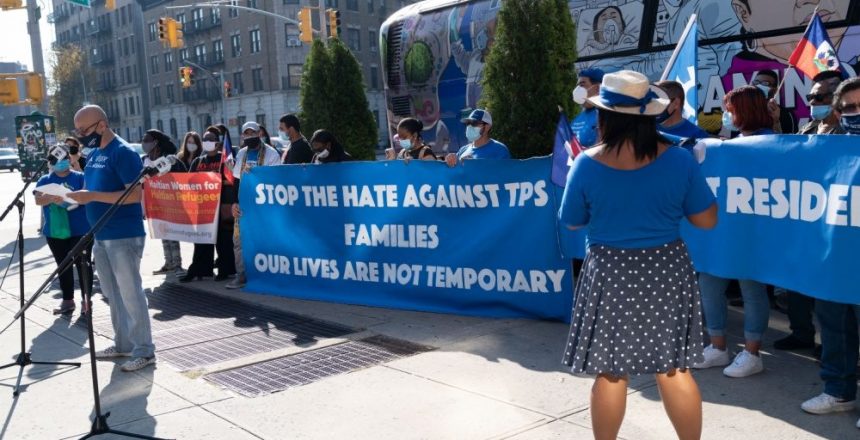
The Supreme Court on Thursday ruled that the Trump administration can move forward with ending Temporary Protected Status (TPS) for hundreds of thousands of Haitian and Syrian nationals living in the United States, delivering a significant victory for the administration’s immigration agenda and potentially exposing many beneficiaries to deportation.
In a 6-3 decision, the court overturned lower-court orders that had blocked the Department of Homeland Security from terminating TPS protections for roughly 350,000 Haitians and more than 6,000 Syrians. The majority concluded that federal law largely prevents courts from reviewing executive branch decisions involving the designation or termination of TPS, a humanitarian program that allows people from countries facing war, natural disasters or other extraordinary conditions to live and work legally in the United States.
Justice Samuel Alito, writing for the majority, said the statute governing TPS gives immigration officials broad authority and limits judicial intervention. The court rejected arguments that lower courts could continue delaying the terminations while legal challenges proceed. The ruling stems from lawsuits filed after the administration moved to end protections for Haiti and Syria, with challengers arguing the decisions were procedurally flawed and motivated by discriminatory considerations.
The decision immediately affects TPS holders from Haiti and Syria and could have broader implications for approximately 1.3 million people from 17 countries covered by the program. Immigration advocates warned that many beneficiaries have lived and worked in the United States for years and could now face uncertainty despite ongoing instability in their home countries. Critics also argued the ruling strengthens executive power over immigration policy and may make future challenges to TPS terminations more difficult.
The ruling also came on the same day the court issued another immigration-related decision favoring the administration, allowing officials to potentially revive a policy that limits access to asylum processing at the U.S.-Mexico border. Together, the decisions mark two of the administration’s most consequential legal victories on immigration this year and underscore the court’s willingness to defer to federal immigration authorities in key policy disputes.
Editorial credit: lev radin / Shutterstock.com