

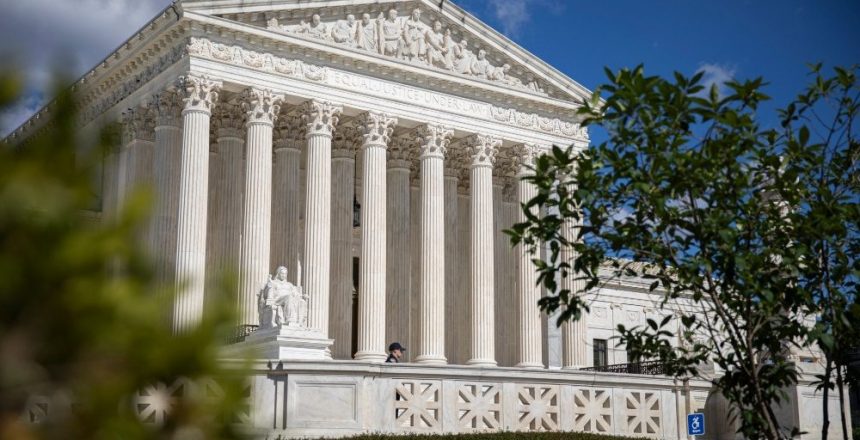
The U.S. Supreme Court ruled unanimously Thursday in a 9-0 decision authored by Justice Neil Gorsuch
that a federal law prohibiting individuals who use illegal drugs from owning firearms violates the Second Amendment when applied to casual marijuana users.
In United States v. Hemani, the justices sided with Ali Danial Hemani, a dual U.S.-Pakistani citizen living in Texas whose home was raided by federal authorities in 2022. Agents discovered a 9mm handgun alongside 60 grams of cannabis, and Hemani subsequently admitted to smoking marijuana approximately every other day. Because Hemani faced no other criminal charges and was not accused of using the firearm while intoxicated, he challenged the validity of the prosecution under the Gun Control Act of 1968.
The justices concluded that the government failed to demonstrate that applying the law to him was consistent with the Constitution’s protections for keeping and bearing arms. The ruling emphasized that historical traditions cited by the government, including restrictions on so-called habitual drunkards, did not justify disarming all marijuana users. Gorsuch noted that the Trump administration’s overarching legal framework “asks us to conclude that anyone who regularly uses marijuana is categorically violent and dangerous without any further showing.” He stated that giving the government such “broad power to designate any group as dangerous and thereby disqualify its members from having a gun” would create a precedent that could “quickly swallow” the Second Amendment entirely. However, the ruling emphasized that the decision remains narrow, explicitly stating that “We do not address efforts to ban addicts, or those presently intoxicated, from possessing a firearm,” nor does it strike down the federal prohibition entirely if specific proof of public danger is established.
The case attracted support from an unusual coalition that included civil liberties advocates, gun-rights groups and cannabis reform organizations, while gun-control and public health groups argued the restriction serves an important safety purpose. The dispute also drew attention because the same law was used in the prosecution of Hunter Biden, who was convicted in 2024 and later pardoned. During oral arguments, several justices from across the ideological spectrum questioned whether occasional marijuana use alone established dangerousness.
The ruling marks another expansion of Second Amendment protections following the court’s 2022 decision requiring modern gun regulations to align with historical traditions. It also highlights growing tension between federal firearms laws and the expanding legalization of marijuana across much of the country, a conflict likely to remain the subject of future litigation and legislative debate.
Editorial credit: Aashish Kiphayet / Shutterstock.com