

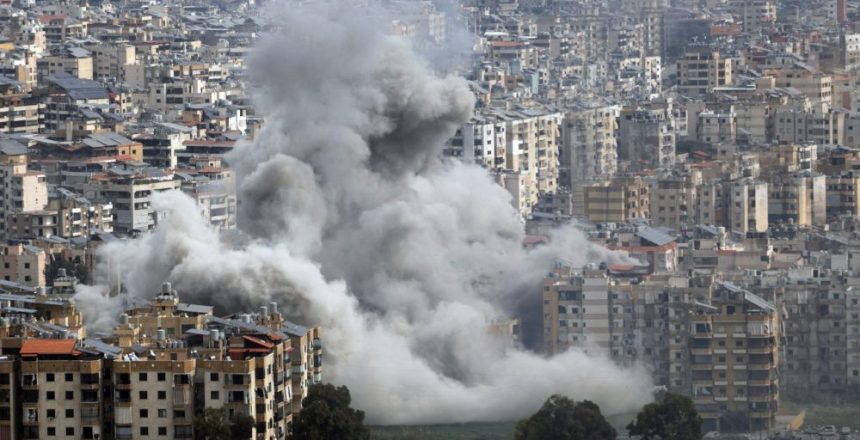
Iran has suspended indirect peace talks with the United States, blaming Israel’s expanding military operations in Lebanon for derailing diplomatic efforts aimed at ending months of conflict across the Middle East.
Iran announced they are walking away from peace talks to protest Israel’s expanding military push into Lebanon, threatening to unravel a delicate ceasefire framework as direct military strikes erupted across the region. Iranian state-affiliated media reported Monday that Tehran’s negotiating team would stop exchanging messages with Washington through intermediaries, arguing that Israeli actions in Lebanon violated conditions that Iran considered essential to any broader ceasefire arrangement. Iranian officials have maintained that any truce must apply across all regional fronts, including Lebanon and Gaza.
The move came after Israel ordered troops deeper into Lebanon as part of its campaign against the Iran-backed Hezbollah movement. Iranian Foreign Minister Abbas Araqchi warned that violations in one theater of the conflict would undermine ceasefire efforts elsewhere, while Foreign Ministry spokesperson Esmaeil Baghaei said continued Israeli operations and what he described as inconsistent U.S. positions were delaying progress toward a diplomatic settlement.
The diplomatic breakdown was punctuated by direct military actions over the weekend. U.S. Central Command confirmed that American fighter aircraft executed targeted strikes on Sunday near Geruk and on Qeshm Island in southern Iran. The Pentagon described the operation as a measured self-defense response after Iranian forces shot down an American MQ-1 drone over international waters. In response, the Islamic Revolutionary Guard Corps fired ballistic missiles targeting a military installation in Kuwait that houses U.S. Army Central forward commands. While Kuwaiti air defenses intercepted the incoming fire, the Kuwaiti government formally condemned the actions, stating it was holding Iran fully responsible for the attacks.
The sudden suspension of talks also puts an abrupt halt to a 14-point memorandum of understanding that diplomats had been crafting. The draft proposal aimed to secure a 60-day cessation of hostilities, establish a framework to renew negotiations over Iran’s nuclear program, and reopen the heavily restricted Strait of Hormuz, where an ongoing maritime blockade has strangled a fifth of the world’s oil and natural gas transit.
Responding to the development, President Donald Trump indicated he was not disturbed by the diplomatic freeze, noting that the United States would maintain its naval blockade on Iranian shipping channels rather than immediately escalating further. “I think we’ve been talking too much, if you want to know the truth,” Trump said. “I think going silent would be very good, and that could be for a long time. It doesn’t mean we’re going to go and start dropping bombs all over there. We’ll just go silent. We’ll keep the blockade. The blockade is a piece of steel.”
Editorial credit: Tayibaa / Shutterstock.com